Attention/Ready Stance
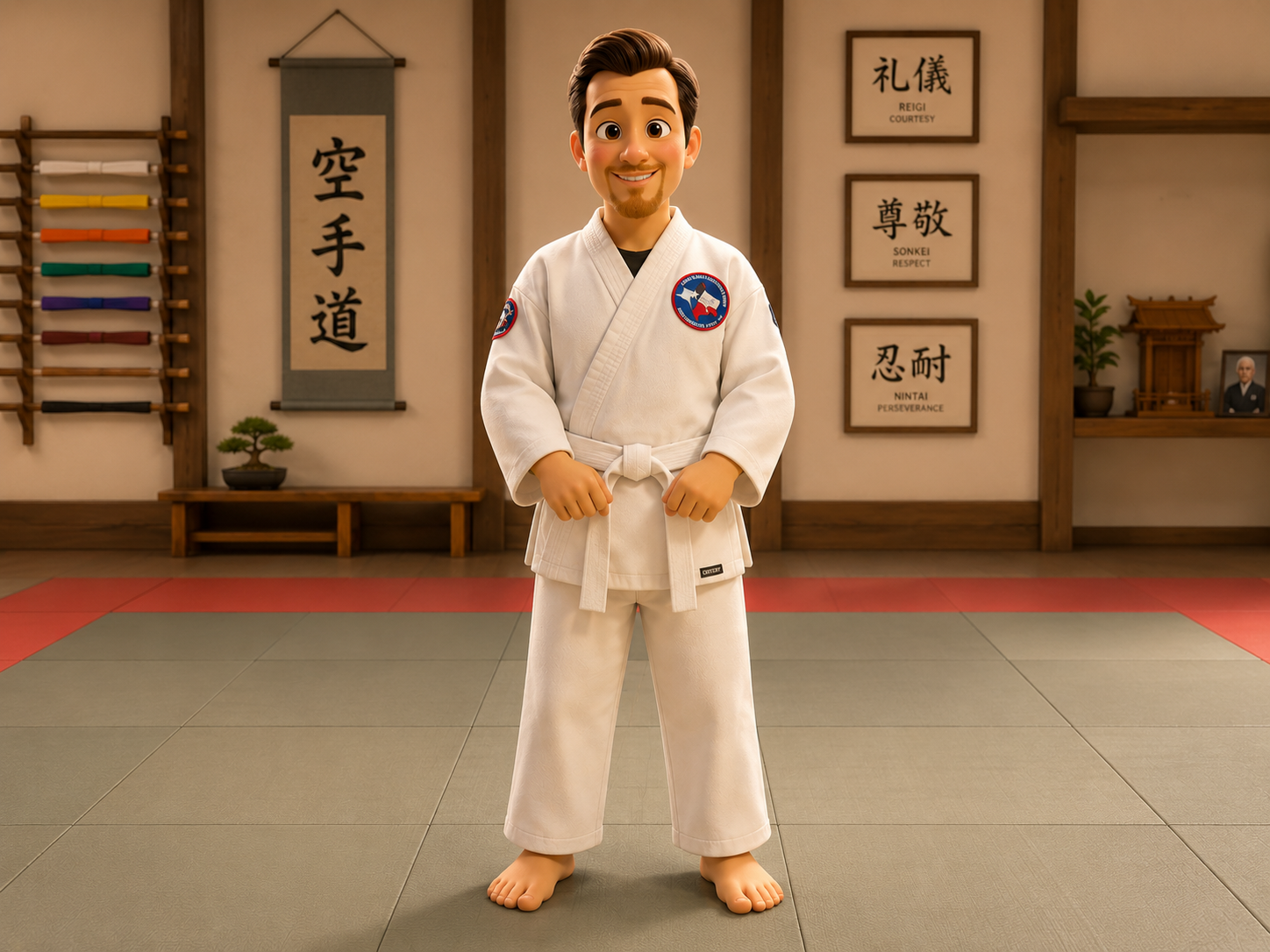
The Attention/Ready Stance, known in Japanese as Heiko-dachi (平行立ち), translates to “parallel stance.” It is a fundamental posture used primarily as a ready stance before executing techniques or katas. The feet are positioned shoulder-width apart, the outer edges parallel and toes pointing straight forward, with weight even across both feet, knees slightly bent, and back straight. This stance promotes alertness and stability, serving as a neutral position from which various movements can commence.
How to Perform the Attention/Ready Stance (Heiko-dachi)
1. Foot Position
- Stand with feet shoulder-width apart, ensuring the outer edges are parallel and toes point directly forward.
2. Weight Distribution
- Distribute weight evenly between both feet, maintaining balance and readiness.
3. Knee Alignment
- Slightly bend the knees to facilitate mobility and maintain a relaxed posture.
4. Upper Body Posture
- Keep the back straight and shoulders relaxed, allowing for efficient movement and technique execution.
5. Maintain Readiness
- Heiko-dachi is often adopted as a preparatory stance before performing techniques, emphasizing a state of readiness without overt aggression.
- This stance also serves as a common transitional position within various katas, facilitating smooth movement between different techniques.
- Practicing from Heiko-dachi helps develop proper posture and balance, foundational elements for executing effective strikes and blocks.