Forward Stance
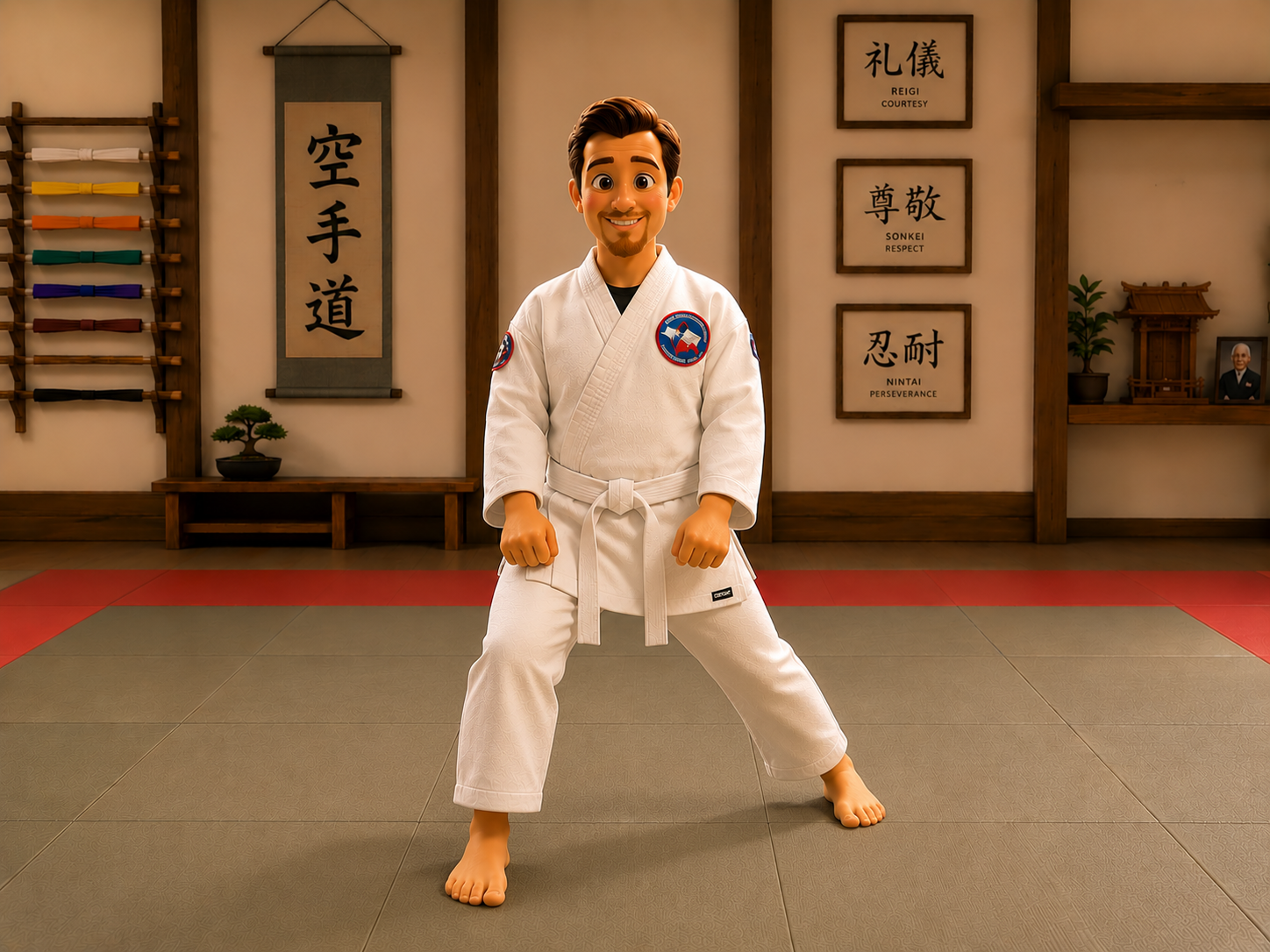
The Forward Stance (also commonly called the Front Stance), known in Japanese as Zenkutsu-dachi (前屈立ち), is a fundamental position emphasizing stability and power. “Zenkutsu” (前屈) means “forward bend” and “Dachi” (立ち) means stance. It is widely used across techniques including strikes, blocks, and transitions in kata (forms), providing a solid base for delivering powerful offensive and defensive movements while enabling effective hip rotation.
How to Perform the Forward Stance (Zenkutsu-dachi)
1. Bring the Feet Together
- Start from a natural stance and bring your feet together so the heels and toes touch.
- For a right-leg-back stance, this means bringing your right foot in to meet your left.
2. Slide the Back Foot Back
- Slide the back foot (right) straight back along the floor.
- Stop when the toe of the back foot is even with the heel of the front (left) foot.
3. Step the Back Foot Out
- Move the back foot out laterally to about shoulder-width from the front foot.
- This sets the rail width of the stance — front and back feet on parallel lines, not directly behind each other.
4. Drop Into the Stance
- “Go over” by shifting your weight forward into the front leg.
- The front (left) knee bends over the ankle (or slightly beyond) for stability. A good depth check: you should not be able to see your toes over your knee.
- The back (right) leg stays straight, anchoring the stance.
- If it feels kind of wrong, it’s probably right — a proper forward stance doesn’t feel natural at first.
5. Foot Position
- Both feet point straight forward, aligned with the direction of the technique.
6. Weight Distribution and Hip Alignment
- Approximately 70% of the body weight is on the front leg and 30% on the back leg.
- Hips face forward (shomen) to facilitate effective execution of techniques.
7. Maintain Power and Mobility
- Zenkutsu-dachi serves as a versatile stance, providing a solid base for delivering powerful offensive and defensive techniques.
- Its structure allows for effective hip rotation, crucial for generating force in strikes and maintaining balance during movements.
Video Reference
For a visual demonstration and further insights into performing the Zenkutsu-dachi, you can refer to these instructional videos: